
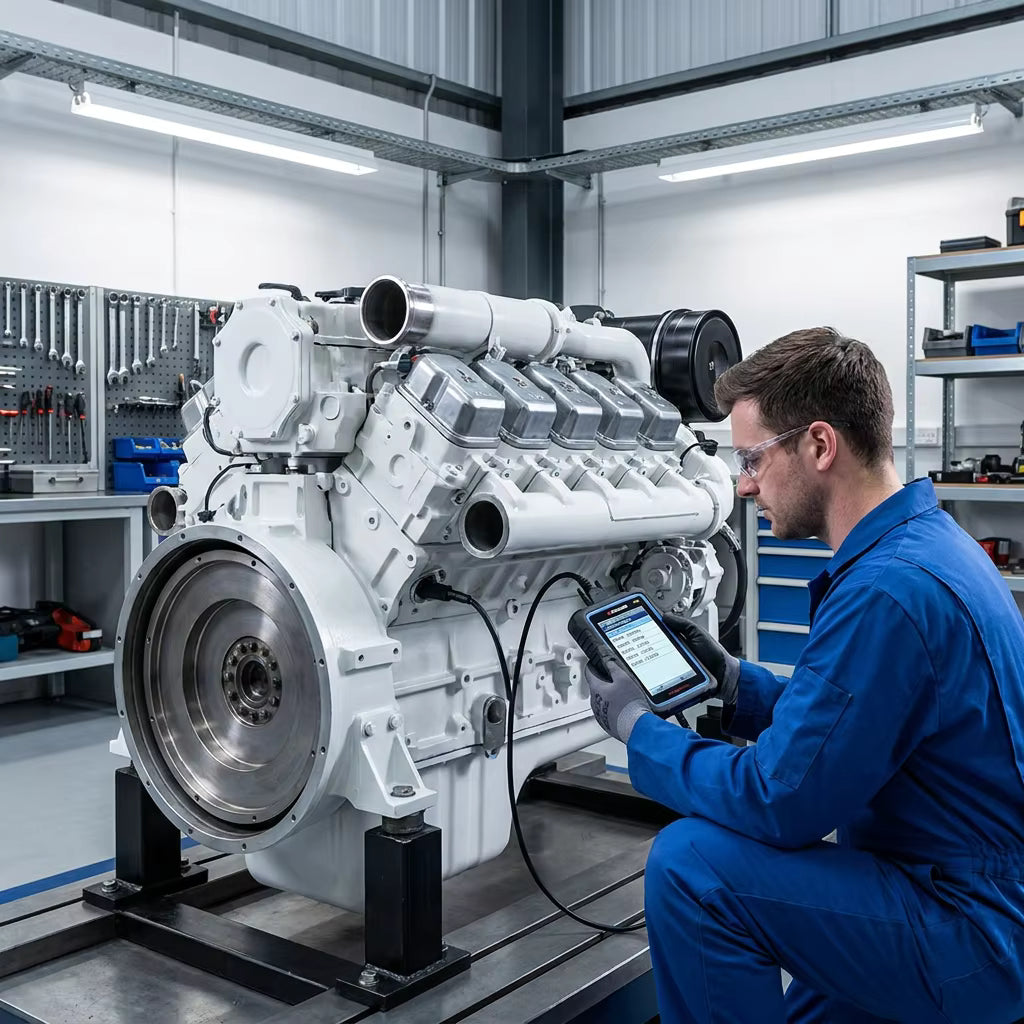
Mitsubishi industrial engines are the tireless workhorses behind thousands of forklifts, generators, excavators, and commercial trucks (including the Fuso series). Known for their compact design and efficient power delivery, series like the 4M40, 4M50, and 6M60 are engineering legends. However, the sophisticated Electronic Control Units (ECUs) that manage modern Mitsubishi engines are highly sensitive to sensor data. When a "Check Engine" light or a digital DTC appears, it's a data-driven message from your machine.
Understanding the Mitsubishi industrial engine fault codes list is the most effective way for fleet managers and owner-operators to minimize downtime and perform targeted, cost-effective repairs. In this guide, we provide a structured fault code lookup, explain how to read these codes on different platforms, and offer a professional diagnostic framework to keep your Mitsubishi powerplant running smoothly.
How to Read Mitsubishi Diagnostic Codes
Mitsubishi engines use different methods for communicating faults depending on the engine generation and the specific application (e.g., a Fuso truck vs. a Mitsubishi forklift).
1. The OBD-II / J1939 Standard (DTCs)
Modern Mitsubishi industrial engines (Tier 4 and Stage V) follow the industry-standard "P-codes" (Powertrain) or "U-codes" (Communication). These are read using a standard OBD-II scanner for trucks or a 9-pin J1939 diagnostic adapter for construction and industrial equipment.
2. The "Flash Code" Method (Legacy EMR)
On older electronic models, you can often "blink out" the codes using the "Diagnostic Lamp" on the dashboard by grounding a specific pin in the diagnostic connector.
- Example: Three long flashes followed by one short flash would indicate Code 31.
Essential Mitsubishi Industrial Engine Fault Codes List
Below is a reference table for some of the most frequently encountered codes in Mitsubishi 4M and 6M series engines.
The "Derate" Warning
If your Mitsubishi monitor shows a turtle icon or limits RPM to 1200-1500, the ECU has triggered a "Derate" mode. This typically happens with fuel pressure codes (P0192) or emissions faults to protect the high-pressure pump from seizing.
Troubleshooting the "Crank but No Start" Condition
One of the most frequent reasons users search for a Mitsubishi industrial engine fault codes list is a machine that refuses to fire. Follow this 4-step technical flow:
1. Check the Fuel Shut-Off Solenoid
On many Mitsubishi engines (like the S4S or 4DQ series), the fuel shut-off solenoid manages the fuel rack. If you don't hear a distinct "click" when the key is turned to "ON," the solenoid coil or its fuse is likely dead.
- Expert Tip: Measure the resistance of the solenoid. It should typically be between 10–30 Ohms.
2. Inspect the SCV (Suction Control Valve)
For 4M50 and 6M60 Common Rail engines, the SCV on the high-pressure pump is a common failure point. If it becomes gummy due to contaminated diesel, it will cause surging or a complete failure to build starting pressure.
3. Air in the System
Mitsubishi fuel systems are sensitive to air ingress. If you've recently changed a filter, ensure you use the primer pump on the filter housing until it is very firm before attempting to start.
4. Harness "Rub-Through" Points
Industrial machinery vibrates heavily. Check the wiring harness where it passes the valve cover or stays near the starter motor. Frayed wires here are a common cause of "Voltage High" codes.
Why Choose WDPART for Your Mitsubishi Repairs?
Downtime in a warehouse or on a construction site is lost revenue. At WDPART, we stock high-quality aftermarket parts for Mitsubishi industrial engines that meet or exceed original OEM specifications.
- Direct Fitment: Our solenoids, sensors, and fuel pumps are designed for a 1:1 replacement on 4M40, 4M50, and 6M60 series.
- Tested for Extremes: Every part is tested for thermal stability and vibration resistance to ensure longevity in heavy-duty environments.
- Fast Global Logistics: We minimize your machine's downtime with rapid shipping to the US, Europe, and Asia-Pacific regions.
Frequently Asked Questions
Q: Can I clear Mitsubishi codes without a scanner?
A: Minor "Soft Faults" may clear after the fault is fixed and the battery is disconnected for 30 minutes. However, "Hard Faults" or emissions-related codes usually require a diagnostic tool to reset the permanent memory.
Q: Where is the diagnostic port on a Mitsubishi forklift?
A: It is typically a 12-pin or 16-pin connector located under the dashboard panel or near the main fuse box area.
Q: Why is my Mitsubishi Fuso in "Limp Mode"?
A: If the ECU detects an abnormal signal from the NOx sensor or Common Rail sensor, it limits engine torque to prevent damage.
Conclusion
Understanding the Mitsubishi industrial engine fault codes list transforms a confusing dashboard alert into a simple maintenance task. By identifying sensor and fuel issues early, you protect your investment and keep your fleet operational.
Need a replacement part for your Mitsubishi? Shop Mitsubishi Engine Parts Collection


